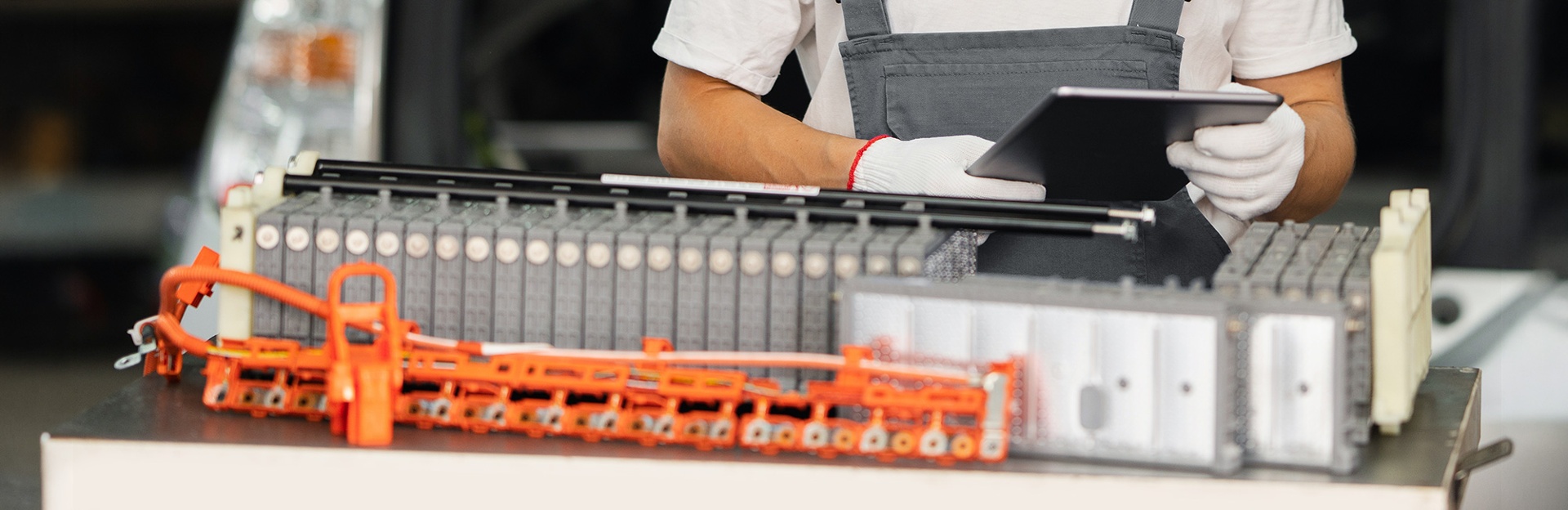
TitleEGLE Examines Ways to Improve Battery Recycling as Disposal Barriers PersistPublication Date2026-05-09SectorBattery - E-Waste Reuse & RecyclingDescription Michigan’s EGLE reports that battery recycling is hampered by public confusion and limited infrastructure. The agency recommends more statewide education and accessible drop-off locations. Addressing these issues could improve recycling rates and environmental outcomes. Read Full Article
TitleBattery Management System Lithium Ion Trends in 2025: AI Integration and Global Market DemandsPublication Date2026-04-17SectorBattery SafetyDescription Artificial intelligence is being integrated into battery management systems to improve safety and reliability. These systems monitor voltage, temperature, and current in real time to detect anomalies and predict potential failures. By identifying risks early, AI-based safety systems help prevent battery fires and extend lifespan. This technology is becoming critical for electric vehicles and large-scale energy storage. Read Full Article
TitleQ&A With Chemist Max Delferro: Unlocking Breakthroughs in Catalytic SciencePublication Date2026-04-14SectorBattery and EV EducationDescription Catalysts underpin much of modern life, including fuels and lifesaving medicines. At Argonne, Max Delferro’s team is combining robotics, artificial intelligence and world-class research facilities to speed the search for the next generation of catalysts. "“Industry has invested billions of dollars in this problem, with some success. Autonomous discovery could change the equation.” — Max Delferro, chemist and group leader Read Full Article
TitleSafer Sodium Battery Eliminates Thermal Runaway With a Heat-triggered Polymer BarrierPublication Date2026-04-08SectorBattery SafetyDescription Researchers developed a polymerizable nonflammable electrolyte that forms a protective barrier at high temperatures, helping prevent thermal runaway—one of the biggest safety risks in batteries. Read Full Article
TitleSAE Technical Standards Offer Broad Support of Battery AdvancementPublication Date2026-04-07SectorBattery R&D and Next-Generation BatteriesDescription SAE International develops and maintains technical standards that are crucial for the advancement of battery technology, particularly for electric vehicles (EVs). These standards ensure safety, performance, and interoperability across the industry, fostering global adoption. As the EV market expands, SAE’s guidelines help manufacturers meet regulatory requirements and consumer expectations. The organization collaborates with industry leaders, governments, and researchers to address emerging challenges and promote innovation. Ultimately, SAE’s efforts support the reliable and sustainable growth of battery-powered transportation worldwide. Read Full Article
TitleWhat the 6th Edition of UL 9540A Means for Battery Storage Safety CertificationPublication Date2026-04-06SectorBattery SafetyDescription Updated UL 9540A standards introduce large-scale fire testing for battery energy storage systems. The changes address thermal runaway risks and system-level safety. Regulators and engineers use these standards to improve reliability. The update reflects growing focus on battery safety at scale. Read Full Article
Title2026 Mobility Trends From Las VegasPublication Date2026-01-08SectorBattery and EV EducationDescription The Consumer Electronics Show 2026 in Las Vegas highlights a major shift in the mobility sector, where artificial intelligence is becoming the central force driving innovation across the entire automotive ecosystem. Companies like Siemens and NVIDIA are collaborating to build AI-powered industrial systems that connect design, manufacturing, and supply chains. A key concept emerging from the event is the “AI-defined vehicle,” where software, simulation, and real-time data shape everything from vehicle development to user experience. Digital twins and AI copilots are enabling faster innovation cycles and more adaptive, intelligent production environments. Read Full Article
TitleBoard Approves Project to Expand EV Battery ResearchPublication Date2025-02-02SectorBattery and EV EducationDescription The University of Michigan is investing $60 million to construct a new electric vehicle (EV) battery laboratory. This facility will support advanced research and accelerate battery innovation for transportation and the grid. The lab will also provide workforce training, preparing students and professionals for careers in battery technology. U-M aims to strengthen its position as a global leader in battery research and development. The initiative is expected to foster industry partnerships and drive economic growth in the region. Read Full Article